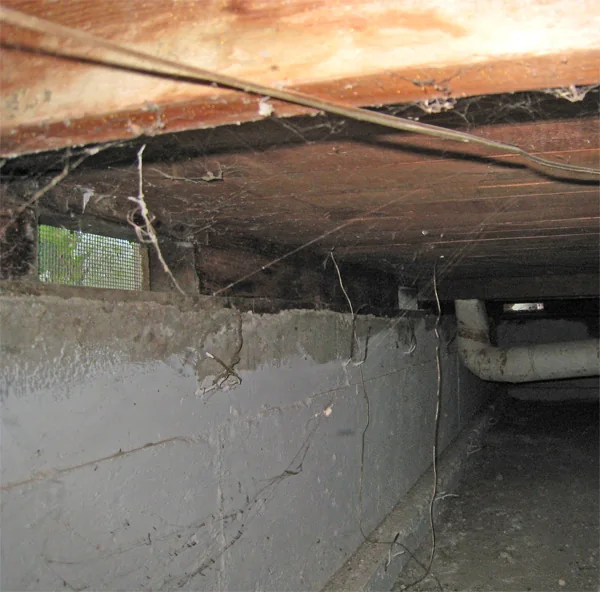
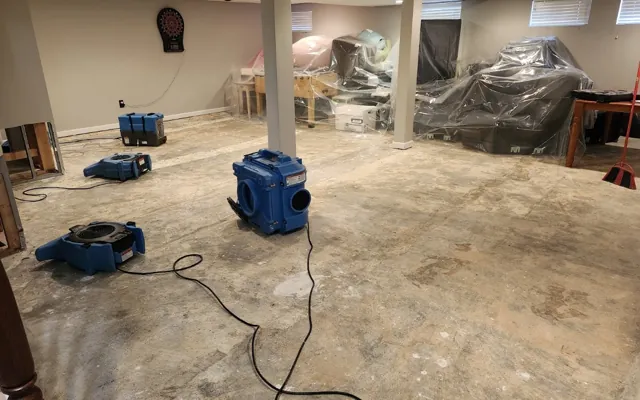
When crawlspace water removal is urgent in Historic West End, NC, local crews respond quickly to map and dry the hidden wetness in those deep spaces. They follow IICRC-standard methods to protect the structure.

Technicians use submersible pumps to clear standing water from the dirt floor and vapor barrier. Any debris carried in by the water is also removed, which allows the space to begin drying effectively.
The crew checks for all sources, from plumbing leaks to groundwater entry, using moisture meters. This mapping ensures the drying plan targets the true saturation in the joists and subfloor, not just visible puddles.
Low-profile air movers and dehumidifiers run in the sealed crawlspace to dry the structure. The team monitors the wood's moisture content until it meets a documented dry standard, protecting the historic framing.

Crawlspace water removal in Historic West End generally runs from about $1,500 to $7,000. The main drivers are the volume of standing water, how saturated the joists and subfloor are, and whether the source is a one-time storm or a chronic leak. A quick pump-out and dry sits at the low end, while widespread framing saturation with mold sits higher. The crew documents the moisture readings and photos so the carrier has clear support for a sudden-loss claim.
The Historic West End's grand old Queen Anne and Victorian homes, built on the area's rolling ground, often have deep crawlspaces where water can hide. Aging original plumbing and roofs can leak, while the red-clay soil and humidity create a perfect environment for moisture to linger and threaten the historic wood framing and finishes. Historic West End homes have deep crawlspaces on rolling terrain, where groundwater can seep in. The area's humid climate, combined with original century-old plumbing and roofs on these houses, makes hidden leaks and condensation a common source for crawlspace water. From Historic West End, crews also cover nearby West Salem, Kimberley Park, Washington Park, Boston-Thurmond, Old Salem, Fairview. See every neighborhood and town on the full service area page.
See all areas servedEvery loss is photographed, measured, and logged from the first visit, so the paperwork holds up with your insurance carrier.
Technicians follow recognized IICRC drying standards and prove the work with daily moisture readings, not guesswork.
Emergency dispatch any hour of the day or night, with a real crew on the way, not a callback in the morning.
A real crew dispatched any hour, not a callback in the morning.
Trained technicians following recognized IICRC drying standards.
Truck-mounted, portable, and submersible for any size loss.
The loss is documented and billed to the carrier directly.
Drying time depends on the water source and how saturated the wood is. For a typical Historic West End job with a plumbing leak, it often takes 2 to 4 days of continuous drying with professional equipment to reach the proper moisture levels in the joists and subfloor.
In the humid climate of Winston-Salem, prolonged moisture in a confined crawlspace can lead to mold growth on wood. Local crews focus on rapid water removal and thorough drying to IICRC standards, which is the most effective way to prevent mold from establishing.
Crews are on call 24 hours a day and can be on the way to Historic West End within the hour.
Call (336) 975-8145