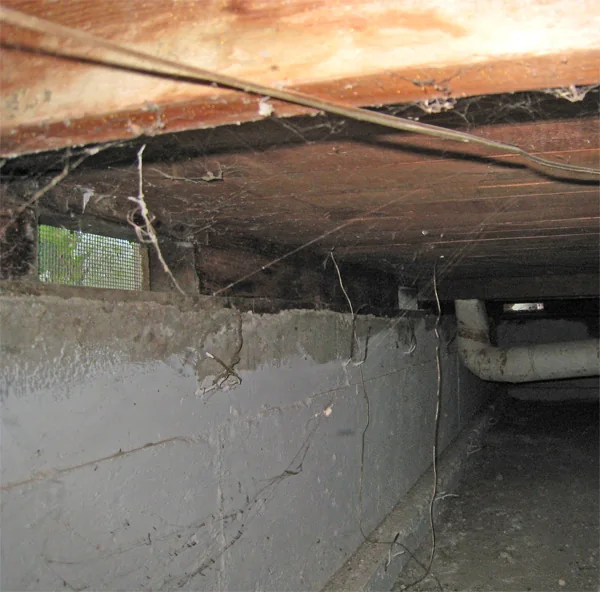
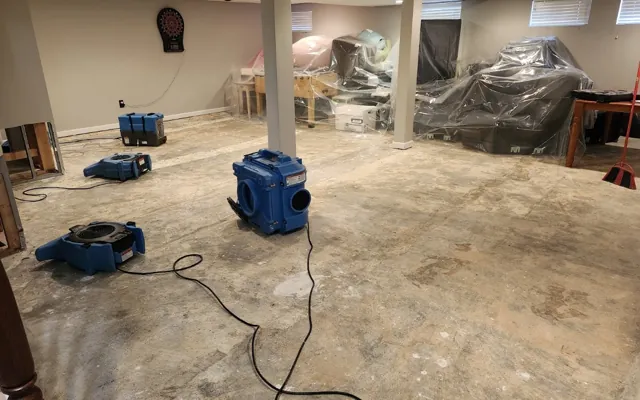
When a Washington Park, NC crawlspace takes on water from a storm, local crews respond quickly with IICRC-standard methods to pump, dry, and document the damage, protecting the home's foundation and framing from lasting harm.

Technicians use submersible pumps to remove standing water from the crawlspace floor and vapor barrier. They also clear any silt or debris carried in by the storm runoff, preparing the space for effective drying.
The team checks for common Washington Park issues like groundwater seepage from saturated clay or plumbing leaks. Moisture meters map the full extent of saturation in the framing to target the drying process accurately.
Low profile air movers and dehumidifiers are placed in the sealed crawlspace. They work to draw moisture from the joists and subfloor, documented to meet specific dryness targets for the older wood common here.

Crawlspace water removal in Washington Park generally runs from about $1,500 to $7,000. The main drivers are the volume of standing water, how saturated the joists and subfloor are, and whether the source is a one-time storm or a chronic leak. A quick pump-out and dry sits at the low end, while widespread framing saturation with mold sits higher. The crew documents the moisture readings and photos so the carrier has clear support for a sudden-loss claim.
Washington Park's historic bungalows and foursquares, many built on low ground near Salem Creek, are vulnerable when heavy thunderstorms push runoff toward foundations. This can send water into the crawlspace, where it saturates the dirt floor and threatens the older wood framing if not addressed promptly. The neighborhood's topography, with its creek-side low spots and clay-rich soil, can direct storm runoff toward older foundations. Sudden downpours common to the Piedmont Triad can overwhelm drainage, leading to water pooling under these classic Washington Park homes. From Washington Park, crews also cover nearby Boston-Thurmond, Kimberley Park, Old Salem, Fairview, West Salem, Happy Hill. See every neighborhood and town on the full service area page.
See all areas servedEvery loss is photographed, measured, and logged from the first visit, so the paperwork holds up with your insurance carrier.
Technicians follow recognized IICRC drying standards and prove the work with daily moisture readings, not guesswork.
Emergency dispatch any hour of the day or night, with a real crew on the way, not a callback in the morning.
A real crew dispatched any hour, not a callback in the morning.
Trained technicians following recognized IICRC drying standards.
Truck-mounted, portable, and submersible for any size loss.
The loss is documented and billed to the carrier directly.
Costs generally range from about 1,500 to 7,000 dollars, driven by water volume and how saturated the framing is. A straightforward pump and dry after a storm is often on the lower end, while jobs involving extensive moisture in the wood structure cost more.
Drying times vary with saturation levels and local humidity. For a typical storm water incident, crews often run equipment for two to four days, using meters to verify the joists and subfloor meet dryness targets before concluding the job.
Crews are on call 24 hours a day and can be on the way to Washington Park within the hour.
Call (336) 975-8145