When attic water damage affects a house in Historic West End, NC, local crews respond fast to map hidden moisture and protect historic finishes, following IICRC-standard drying methods for a complete restoration.

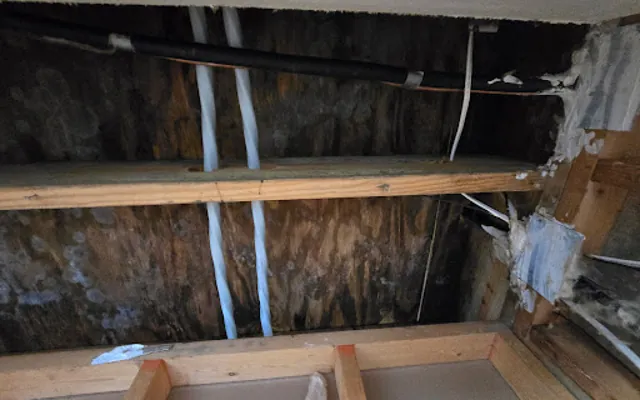
Technicians inspect the roof line from inside the attic, using moisture meters and infrared to see how far water traveled through old insulation and along the historic rafters and top plates.
Saturated fiberglass batts are bagged and removed. Any drywall on the ceiling below that is wicking moisture is cut back to sound material to stop further damage to the historic finishes.
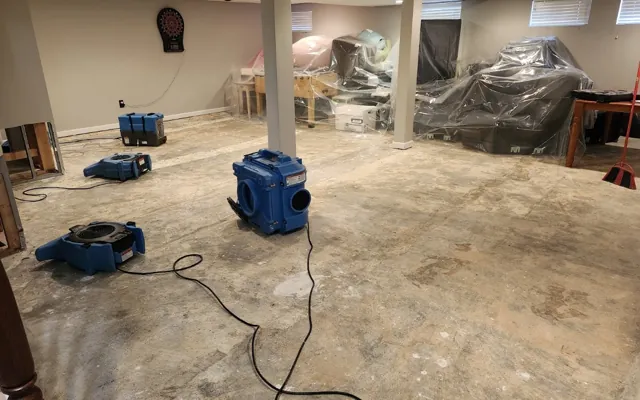
Air movers and dehumidifiers are placed in the attic and rooms beneath it. The crew dries all framing to a specific moisture content, not just until surfaces feel dry, and documents the readings.

Attic water damage in Historic West End generally runs from about $1,500 to $6,000. The main drivers are how much insulation must be removed, whether ceiling drywall below is affected, and how far water tracked into the framing. A small, quickly caught leak sits at the low end, while a saturated attic with ceiling damage runs higher. The crew documents moisture readings and photos so the carrier has clear support for a sudden-loss claim.
In the Historic West End's historic streetcar suburb, Queen Anne and Victorian homes from the late 1800s carry original plumbing and aging roofs. A leak at the roof deck or vent can send water deep into insulation and framing, threatening plaster ceilings and ornate woodwork if not found and dried thoroughly. In Historic West End, NC, heavy Piedmont rains test old roof flashings and vents. Water then travels along sloped attic framing and soaks into the deep layers of insulation common in these historic homes, often going unnoticed until it stains a ceiling below. From Historic West End, crews also cover nearby West Salem, Kimberley Park, Washington Park, Boston-Thurmond, Old Salem, Fairview. See every neighborhood and town on the full service area page.
See all areas servedEvery loss is photographed, measured, and logged from the first visit, so the paperwork holds up with your insurance carrier.
Technicians follow recognized IICRC drying standards and prove the work with daily moisture readings, not guesswork.
Emergency dispatch any hour of the day or night, with a real crew on the way, not a callback in the morning.
A real crew dispatched any hour, not a callback in the morning.
Trained technicians following recognized IICRC drying standards.
Truck-mounted, portable, and submersible for any size loss.
The loss is documented and billed to the carrier directly.
For a typical job in these older homes, the active drying phase with equipment running often takes 3 to 5 days. The timeline depends on how far water traveled into the deep framing and the humidity levels inside the sealed-off attic space.
Not necessarily. Technicians only remove insulation that is saturated or shows high moisture readings. In Historic West End attics, they often find wet batts near the leak source but can preserve dry material farther away, reducing disposal and replacement costs.
Crews are on call 24 hours a day and can be on the way to Historic West End within the hour.
Call (336) 975-8145