Winston-Salem winters are mild, but a hard-freeze night can split an uninsulated pipe and flood a home the moment it thaws. Local crews extract the water, open wet cavities, and dry the structure with IICRC-standard methods, any hour.

Technicians confirm the water supply is off, locate the failed section, and map how far the thawed water spread using moisture meters before drying begins.
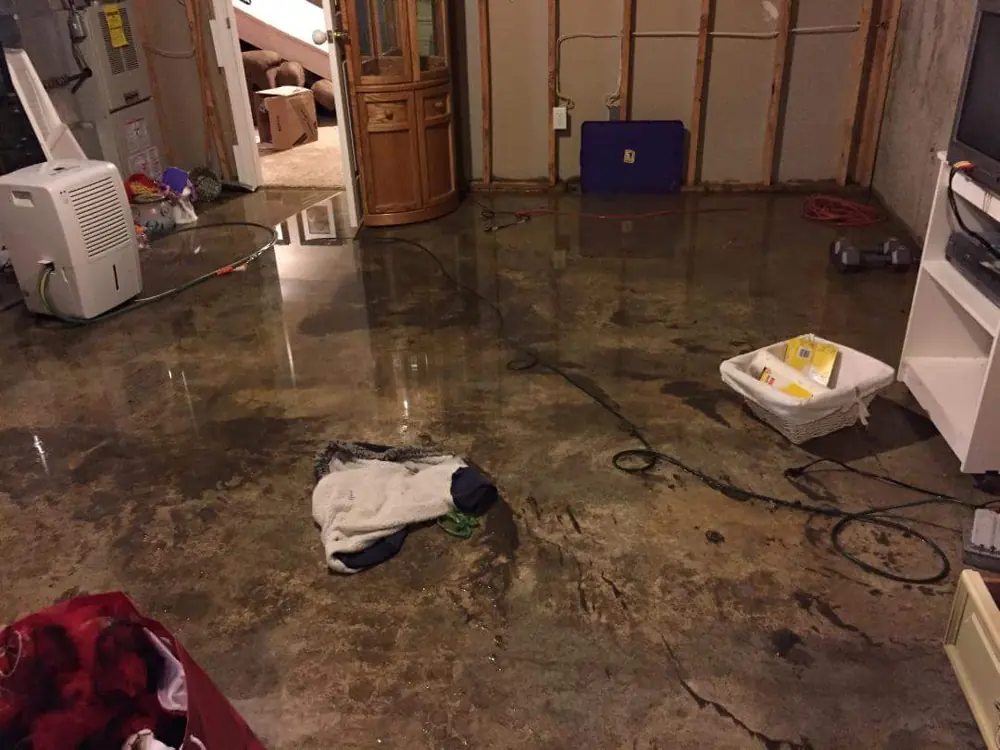
Truck-mounted extractors and pumps clear water from floors, carpet, and any pooling so the structure can start drying without the moisture continuing to spread.
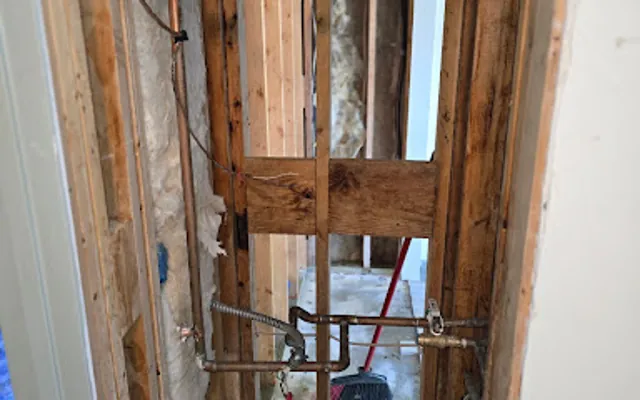
Baseboards and controlled drywall cuts open saturated wall bays and let air reach the framing and insulation, which a closed wall would otherwise hold wet for days.
Air movers and dehumidifiers dry the structure to a verified target while moisture is tracked daily, and the readings and photos are compiled for the insurance claim.

While help is on the way, these first steps, done only where it is safe, limit the damage and protect the insurance claim.
Shut the supply off at the source, or close the home's main valve if the source is not obvious. Stopping the flow limits the damage more than anything else.
Switch off electricity to the affected area, but only if the breaker can be reached without standing in or touching the water.
Get a crew dispatched right away. The sooner extraction and drying begin, the more flooring, drywall, and belongings can be saved.
Take photos and a short video of the water and the affected rooms before anything is moved, so the insurance claim starts strong.
Frozen pipe damage in Winston-Salem generally runs from about $2,000 to $9,000. The biggest drivers are how long the thawed line released water, how many rooms and floors it reached, and how much drywall and flooring must be opened and dried. A quickly caught break sits at the low end, while a line that ran unseen for hours sits higher. The crew documents the moisture readings and photos to support the insurance claim.
Crews reach Winston-Salem and Forsyth County fast, from Ardmore, the West End, and Old Salem to nearby Kernersville, Clemmons, Lewisville, Walkertown, and King. See the full list on the areas served across Winston-Salem page.
See all areas servedEvery loss is photographed, measured, and logged from the first visit, so the paperwork holds up with your insurance carrier.
Technicians follow recognized IICRC drying standards and prove the work with daily moisture readings, not guesswork.
Emergency dispatch any hour of the day or night, with a real crew on the way, not a callback in the morning.
A real crew dispatched any hour, not a callback in the morning.
Trained technicians following recognized IICRC drying standards.
Truck-mounted, portable, and submersible for any size loss.
The loss is documented and billed to the carrier directly.
In Winston-Salem, the lines running through vented crawlspaces, exterior walls, and unheated garages are most at risk, because homes in this mild climate are rarely built to protect them from an occasional hard freeze. Any pipe in an unconditioned space that is not insulated or heated can freeze on a cold night.
Often not while it is frozen. The ice can plug the split so no water escapes until temperatures rise and the pipe thaws, at which point water releases under full pressure. That is why a pipe that froze overnight can flood a home in the morning as the day warms up.
Shut off the main water supply so that if the pipe has split, it will not flood when it thaws. Keep the area accessible and call for help. If water is already flooding, cut power to the area if it is safe, and get emergency extraction started as quickly as possible.
A sudden freeze burst is commonly covered, though carriers may look at whether the home was kept heated and maintained. The crew documents the failure point, the conditions, and the moisture readings so the adjuster has clear support, and the carrier makes the final coverage decision.
Winston-Salem crews are on call 24 hours a day, local and fast, and can be on the way within the hour.
Call (336) 975-8145